
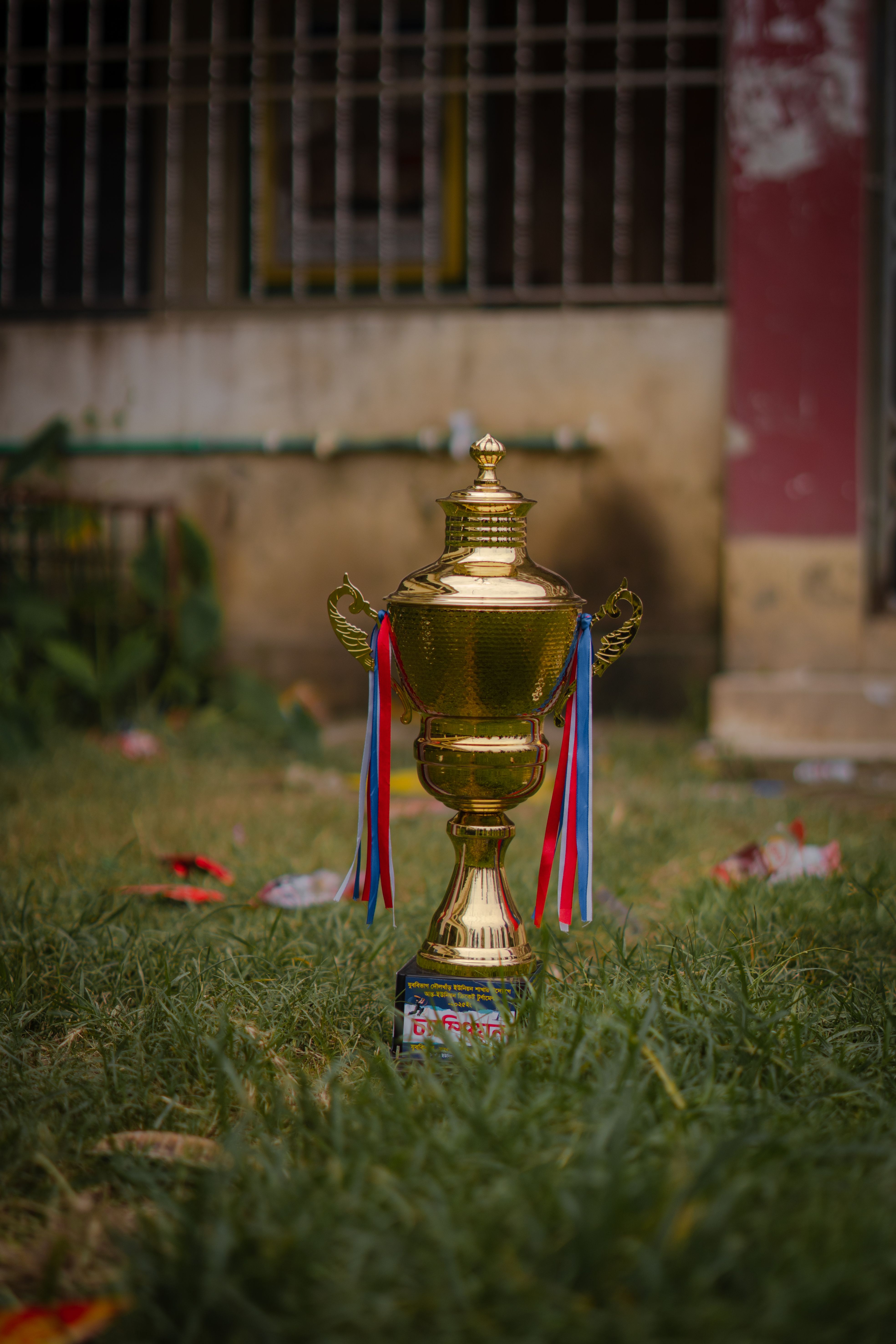
Every Indian winter, the same name pops up on sports pages across the country - the Ranji Trophy, the blue riband of domestic cricket. Schoolboys grow up hearing their coaches bark about it. State associations fight over hosting rights. And yet, ask ten people who Ranji was, and most will draw a blank.
The answer surprises nearly everyone: the trophy is named after a prince who never once played for India. He played for England. He was dead before the trophy even carried his name. And the whole thing nearly went to a British viceroy instead. Let's dig into the real story behind the name.
Who Was Ranji? The Man Behind the Trophy
His full name was Kumar Shri Ranjitsinhji Vibhaji - which is why you'll see him written down as K. S. Ranjitsinhji. He was born on 10 September 1872 in the princely state of Nawanagar, a small realm that today lies inside Jamnagar district in Gujarat. He would eventually rule it as Jam Sahib, the hereditary title of Nawanagar's rulers.
But the crown was years away. As a young man, Ranjitsinhji crossed the sea to England, and there he did something that changed the game forever.
He Invented a Shot That Nobody Had Seen
Modern batters take the leg glance for granted, so it is easy to forget that somebody had to invent it. That somebody was Ranji. Instead of forcing the ball through the off side, he would use the pace already on the delivery and tuck it fine down the leg side with the softest, most graceful deflection.
He also brought in the back-foot drive and the back-foot punch - strokes that, until then, barely existed in the coaching manuals of his day. In his debut season for Sussex in 1895, he racked up more than a thousand runs. Nobody had ever reached four figures in a first season before. The English public was spellbound, and his county fans gave him a nickname that would outlive everything else he achieved - "Ranji".
The Twist Nobody Expects: He Played for England
Here is the part that trips everyone up. Between 1896 and 1902, Ranjitsinhji played 15 Test matches - but he walked out in the colours of England, not India.
It sounds odd, sure, but the reason is simple enough. There was simply no Indian Test side back then. India's first-ever Test match came only in 1932, a full three decades after Ranji's best years. If an Indian-born player wanted to test himself against the world's best, the only door open to him was England's.
And he made that door count. In those 15 Tests he scored 989 runs at an average of 44.95, with two centuries. Wisden, cricket's bible, named him a Cricketer of the Year in 1897. For millions back home, this was enormous - living proof that an Indian could stand toe to toe with the finest English players at the very height of empire.
So How Did the Trophy Get His Name?
Fast forward to July 1934. The BCCI, formed only a few years earlier, wanted to build a proper domestic structure to feed the national team. The first idea for the tournament's name was plain and functional - the Cricket Championship of India.
Then two princely egos got involved, and this is where the story gets juicy.
It Nearly Became the Willingdon Trophy
There was a power struggle going on over the future of Indian cricket between two wealthy royals - Bhupinder Singh, the Maharaja of Patiala, and the Maharajkumar of Vizianagaram, better known as Vizzy. At one point the trophy was almost named after Lord Willingdon, the British Viceroy of India, which would have been a very colonial outcome indeed.
In the end, Bhupinder Singh gave the actual champion's cup as a donation - a real silver trophy - and pushed for the competition to be named after Ranjitsinhji instead. The timing made it poignant: Ranji had died in April 1933, barely a year earlier. On 4 November 1934, the first-ever Ranji Trophy match was played at the M. A. Chidambaram Stadium in Madras between Madras and Mysore, and it was all wrapped up inside a single day.
A Family That Became a Trophy Dynasty
Ranji was not the last of his line to get a trophy named after him. His nephew Duleepsinhji, yet another gifted batter who also represented England, gave his name to the Duleep Trophy. So the next time someone mentions Ranji and Duleep in the same breath, you can smile - they are uncle and nephew.
Why the Ranji Trophy Still Matters
For the better part of a century now, the Ranji Trophy has quietly been the nursery of Indian cricket. Sunil Gavaskar, Sachin Tendulkar, Rahul Dravid and Virat Kohli all cut their teeth in this competition long before the world knew their names. Every year, a fast bowler from a small town uses Ranji as his audition for the Indian team.
So when you hear "Ranji Trophy", think about what the name actually stands for. A prince who crossed the colour line of empire to prove an Indian could be the best batter on the planet. A trophy that nearly went to a viceroy instead. And a memory that has outlived the man by ninety years. That is one heck of a story hiding behind a simple name.
Love stories hidden in names and songs? Then you'll enjoy our look at the story behind Ho Jamalo, and the surprising real origins of the Happy Birthday song.