
Here's a banana. Go on, look at it properly for a second. You've peeled a hundred of them without a second thought, but slow down and you'll notice something: it doesn't hang straight down. It curves upward, with a gentle tilt, almost as if it's reaching for something. Nature has a beautiful habit of hiding cleverness in ordinary shapes, and this little bend is a perfect example. So why are bananas curved? There's a real answer folded into that arc.
Chapter one: a word worth showing off
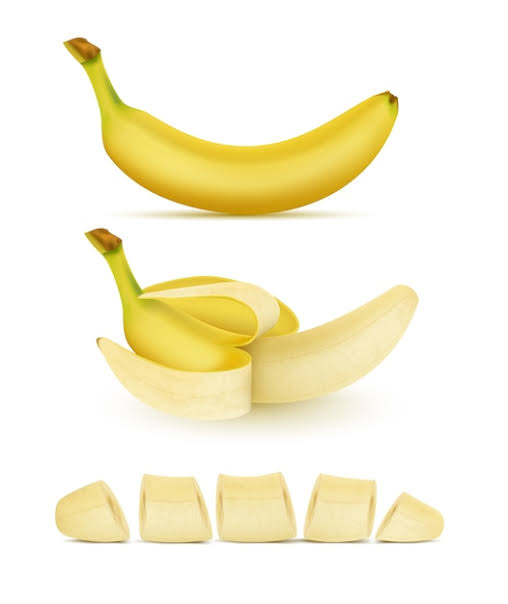
To understand the banana, you first need to meet a phenomenon called gravitropism — also known as geotropism. Let's break it down, because it's easier than it sounds. "Tropism" simply means the movement or growth of part of an organism in response to an outside stimulus. "Gravi" — or "geo" — means gravity. Put them together and you have growth in response to gravity. That's the whole idea.
There are two directions it can go. Positive gravitropism is growth that follows gravity — picture roots pushing cheerfully down into the soil, away from the light. Negative gravitropism is growth that pushes against gravity — like a stem climbing upward toward the sky. And by now you can probably guess where bananas fall: they're firmly in the negative gravitropism camp. The bunch of bananas hangs downward from the plant, but each individual fruit grows back against gravity's pull. That's the first half of the bend.
Chapter two: the hormone behind the curve
The second half comes from a plant hormone called auxin. Auxin is one of the most important growth regulators in plants, and it does something curious: it moves. When one side of the fruit is exposed to more light than the other, auxin migrates away from the sunlit side and piles up on the shaded side. That higher concentration on the dark side makes those cells elongate and grow faster than the cells on the bright side.
Now stack the forces together. Light pushes steady growth on the shaded side; gravity keeps pulling the developing fruit downward. Faster growth on one flank, a constant tug on the other, and the two slowly curve the banana into that familiar gentle arc. It's a tug of war inside a single fruit, with light and gravity each pulling in their own direction and the banana — quite literally — caught in the middle.
Because sunlight is part of the story, this is also a form of phototropism — movement toward light. In the wild, the banana plant's broad leaves spread out to catch the sun, and the fruit hangs beneath them, curving upward as though trying to peek around the leaves. The curve is a growth strategy, not a decoration.
Chapter three: not every banana agrees
Here's the honest part. Not all bananas behave this way equally. The exact shape depends on the species, the growing conditions, and the surroundings. Some varieties hang nearly straight; others curl dramatically. It comes down to genetics and environment — how much light the fruit sees, and how the plant happens to grow.
Bananas aren't alone in the trick, either. Cucumbers, gourds and several other fruits are said to show the same kind of curving under the same combination of light and gravity. Nature reuses a good idea, so once you notice the pattern in a banana, you start spotting echoes of it all over the produce aisle.
A fruit that's secretly a herb
One more thing worth knowing, because it reframes everything: the banana "tree" you picture isn't really a tree at all. It's a giant herb — the world's largest, in fact — with a soft, not woody, trunk of tightly packed leaf bases. And the wild bananas of the tropics, the ones this fruit descended from, are full of hard black seeds. The smooth, seedless bananas we eat today were shaped over centuries of cultivation. So the next time you hold one, remember: you're holding the product of a plant that is quietly doing physics and chemistry the entire time it grows — listening to light, fighting gravity, and settling the two into the shape that lands in your lunchbox.
That gentle curve you've taken for granted your whole life isn't a flaw or a fashion. It's the visible record of hormones, light and gravity pulling against each other, shaping the fruit from the inside out long before it ever reaches your kitchen counter.