
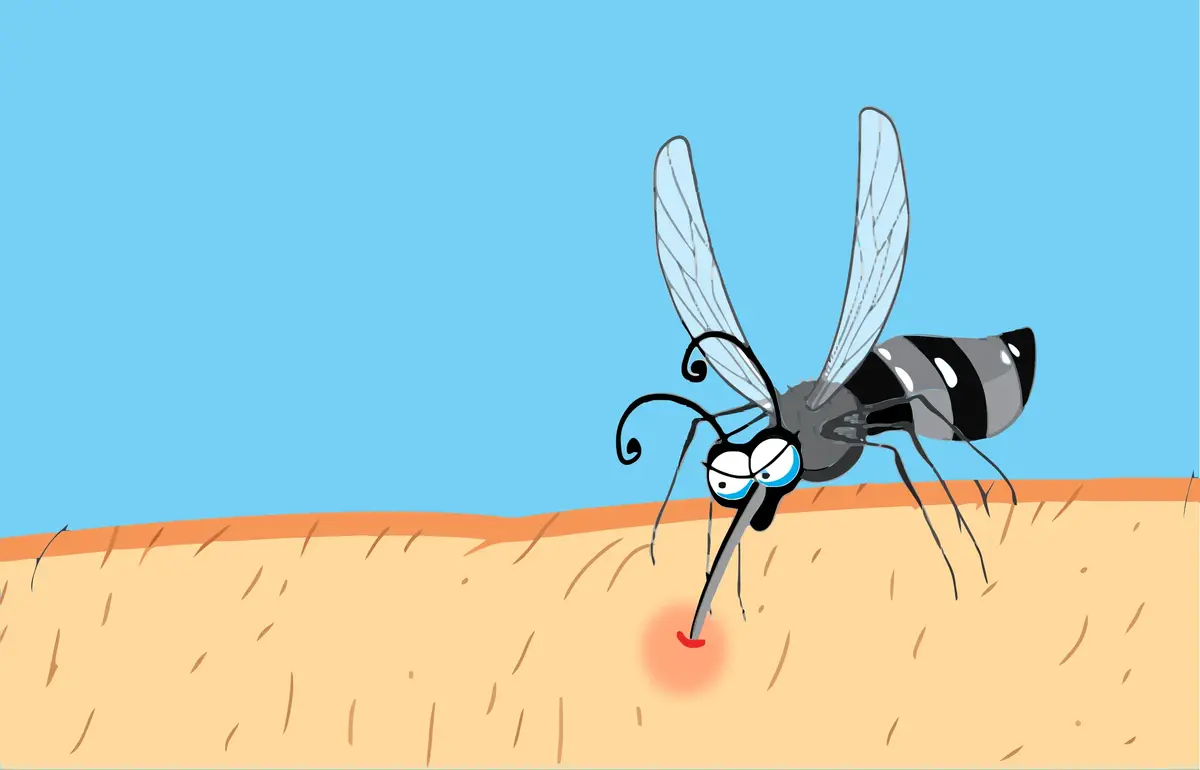
If you've ever spent a summer evening outdoors, you know the scene. A faint, high whine near your ear. A sudden sting on the ankle. And before you know it, you're scratching away and swearing that the mosquitoes have singled you out personally. Here's the secret nobody tells you: it was never personal. You were simply, unluckily, on the menu.
Who's actually doing the biting?
Let's give the pesky ones a little fairness first. Not every mosquito humming past your ear is out for blood. In fact, only the females bite — the males are perfectly content sipping nectar from flowers and minding their own business. No, really. There's a plain, practical reason, and it comes down to how mosquitoes keep their world going.
A female mosquito doesn't bite you out of hunger or spite. She needs something your blood offers that flower nectar simply can't: protein. That protein goes into building her eggs. Picture a mother-to-be heading out on a quick shopping trip for an ingredient she can't grow herself. Blood is a female's errand, not a meal — which is why only she comes after you.
What really happens when she feeds
Here's the part that surprises most people: it isn't as simple as a straw poking into a juice box. When a female lands on you, she uses her needle-like proboscis to reach a blood vessel beneath your skin. And as she feeds, she passes a little of her saliva into your bloodstream.
That saliva contains an anticoagulant — a substance that stops your blood from clotting around the tiny wound. Clever, really: it keeps the flow smooth so she can finish her meal and be gone before you notice. But here's the twist that explains everything you actually feel. You don't feel the bite itself. What you feel is the aftermath. Your body recognises that foreign saliva as an intruder and fires up its defences around the spot — and that little inflammatory battle is the itch. Which is also why scratching makes it worse: every scratch stirs the defences up further, so the itch redoubles instead of fading.
Why some people are mosquito magnets
If you've ever sat beside a friend who gets eaten alive while you walk away untouched, you're not imagining a conspiracy. A few real factors make certain people more attractive to mosquitoes.
Skin is a big one. The specific mix of bacteria living on your skin produces a personal chemical signature — a scent only they can read — and some signatures are far more inviting than others. Mosquitoes also home in on the carbon dioxide you exhale, which they can sense from a surprising distance, and on lactic acid and other compounds in your sweat. Warmer body temperature draws them too, which is partly why you seem to attract more of them when you're active and flushed. And there's blood type: studies have suggested that people with type O blood get bitten more often than others. Stack a few of those together — the right bacteria, a warm body, a type-O signature — and you've essentially hung out a welcome sign.
The honest part
For all the research, mosquitoes still manage to surprise scientists. Exactly why one person becomes a magnet and another becomes invisible is a tangle of chemistry, heat, genetics and variables that researchers are still working out. Nobody can hand you a perfect "why me" answer just yet. What we can say with confidence is that it's biology, not revenge — and there's a strange comfort in that.
How to stay off the menu
The good news is that you're not defenceless. A few simple measures genuinely help. Use a repellent on exposed skin. Sleep under a net where mosquitoes are common. Cover your arms and legs when you're outdoors around dusk. And, most importantly, clear away any stagnant water near your home — in buckets, plant pots, old tyres, blocked drains — because standing water is exactly where mosquitoes breed. A few quiet habits and you slip off their radar.
So the next time you hear that familiar whine, remember the whole story: a tiny insect on an ancient errand, using a drop of your blood to build the next generation. It was never a hit list. Just biology, doing its thing.