
What's the time? Ask that question in any room today, and everyone will reach for a wristwatch, a phone, a laptop or a smart kitchen gadget and give you an answer within a second. We've come a long way with technology. But have you ever wondered how ancient people managed to tell the time before any of those things existed?
It turns out the answer is more creative than you might think — and it has chapters.
Chapter One: watching the sky
Before clocks were invented, people leaned on their powers of observation — watching the changing seasons, the movement of the stars, and the subtle shifts in the world around them — to decide what to do and when. This told them which seeds to sow, when to build shelter before the rains, and plenty more.
When it comes to marking time itself, history tells us that the Egyptians, the Chinese, the Hindus (the people of Bharat, or India), the Babylonians and the Sumerians all developed and exchanged methods for tracking the passage of time.
The sundial
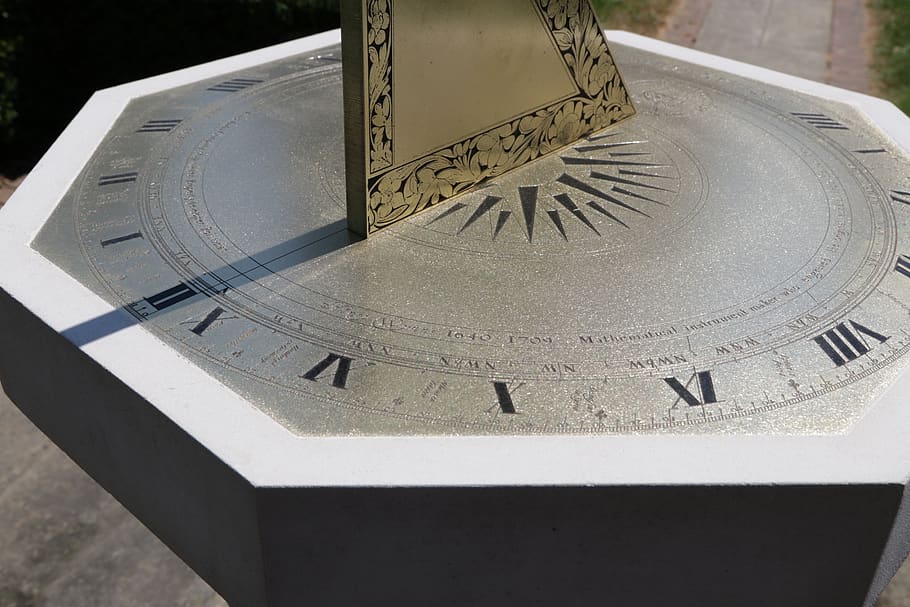
According to the history books, the sundial is considered one of the most ancient methods of tracking time. As the name suggests, it relied on the Sun. A tall, vertical, diagonal object — called a gnomon — was fixed in place, and the shadow it cast revealed the time of day. By reading the length and angle of that shadow, people could tell how much time had passed. These devices are mainly attributed to the Egyptians and Sumerians; the oldest known examples date back thousands of years in Egypt.
Water clocks
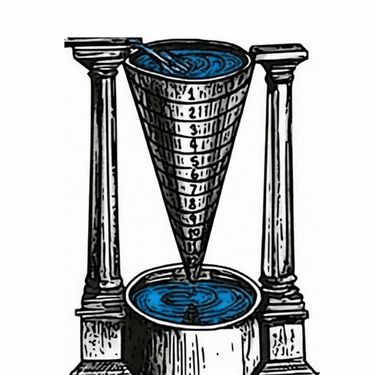
As you can probably guess, a sundial is useless at night, and useless under cloud. To work around that, inventors came up with the water clock — known to the Greeks as the clepsydra. There were two main methods, inflow and outflow, and both used two containers. One container held water and had a small hole; it sat above a second, empty container. As the water dripped down and filled the lower vessel, the water level indicated how much time had passed. You could mark the time either on the bottom container (the inflow method) or on the top one (the outflow method).
The ancient Hindus used a slightly different version too: a small container with a hole was placed in a larger container full of water. When the small container filled and sank, it marked that a certain span — say, half an hour — had passed.
Even so, water clocks weren't perfect. They had downsides, like water freezing in low temperatures, and the changing water pressure as the level dropped could throw off their accuracy.
The hourglass
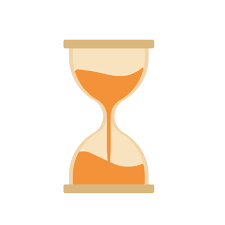
Similar in spirit to the water clock, the hourglass used sand instead of water to measure a set span of time. Two rounded glass bulbs sat one above the other, and sand trickled from the top bulb into the bottom one. These were said to be cheaper to maintain and simpler to make, and they became popular on naval vessels. However, the rocking of those great ships sometimes disrupted the flow — and the measurement — too.
Chapter Two: arguing about when the day begins
By the 14th and 15th centuries, there were plenty of methods for keeping time. What sparked a huge discussion was a different question entirely: when should the day actually begin? The Babylonians favoured sunrise, the Italians preferred sunset, and the Germans started the day somewhere in the middle. Ultimately, the French idea of two 12-hour periods, beginning at midnight, won out — and that's the convention most of the world still follows today.
Uniformity was always the challenge, and it was eventually improved by using pendulums and pulses, which made timekeeping far harder to disturb — whether by celestial bodies, freezing temperatures, or even a rocking ship. Mechanical clocks with weights and gears followed in Europe, slowly turning timekeeping into something reliable and portable.
The takeaway
Slowly, these improvements reshaped how we think about time, until today we can tell it with remarkable accuracy. From having to walk to a single public place to check the hour, we now carry it in our pockets, on our wrists and around our kitchens.
Now you know how ancient people kept time. But do you know why there are different time zones? If you're curious, this article can shed some light: why do we have different time zones?. That's all for today's curious question. Until next time, remember to listen to the curious mind.