
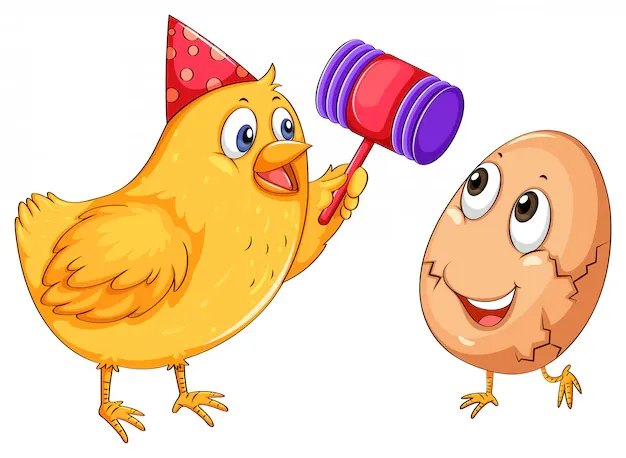
Every group of friends has a version of this argument, and it always happens late at night: which came first, the chicken or the egg? Say "chicken" and someone will point out that it hatched from an egg. Say "egg" and someone will remind you that something had to lay it. The riddle is ancient, it's elegant, and it's rigged — because biology quietly hands the egg the win. Let me show you how.
The Answer Is the Egg
Straight answer: the egg. It always was.
The trick is that an egg was never a chicken thing. An egg is a protected shell around developing life, and that strategy is many hundreds of millions of years older than any bird. Long before chickens existed, the early ancestors of reptiles were already laying hard-shelled eggs on land, and after them came the age of dinosaurs. Snakes lay eggs. Fish lay eggs. Crocodiles and turtles lay eggs, and so does every bird you've ever seen. By the time the first chicken opened its eyes, the egg had been one of evolution's favourite inventions for an absurdly long time.
So when did the first chicken egg arrive? Picture two birds that are almost chickens — not quite there yet, but carrying the family line forward. One day they mate, and inside an egg, in a single genetic shuffle, something new tips into place. What hatches from that egg is the very first true chicken, born to parents that were not chickens. The egg came first. That's not a trick of wording; it's how evolution does everything, one small change at a time. The same slow machinery gave humans erecting our spines over millions of years, reshaped our jaws, and let different skin tones emerge as our ancestors moved into different climates — and it's why there are fish living in dark caves that have simply lost their eyes because they don't need them.
And the timeline can be gently humbling for the chicken's supporters. The hard-shelled egg arrived on land hundreds of millions of years ago; the dinosaurs that made eggs famous were long gone before a single bird sang; and the red junglefowl itself is far older than the thing it gradually became. Molecular and archaeological work suggests people were already keeping those ancestors in South and Southeast Asia roughly eight thousand years ago — a domestication project older than the pyramids. The egg never even noticed the competition.
Where Chickens Came From
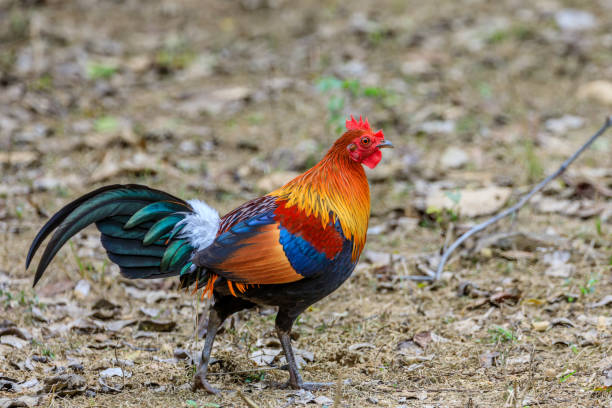
If you want to point at an ancestor, the honour usually goes to the red junglefowl — a wild bird native to parts of India, China and Malaysia. People began keeping these junglefowl, and generation by generation they mellowed: calmer, tamer, and far better at laying eggs. Over thousands of years of human company, the flighty wild bird settled into the chickens we know today. We've been carrying them from place to place for more than a millennium — and a millennium of selective breeding is more than enough time for a bird to change its whole character.
But Wait — the Twist
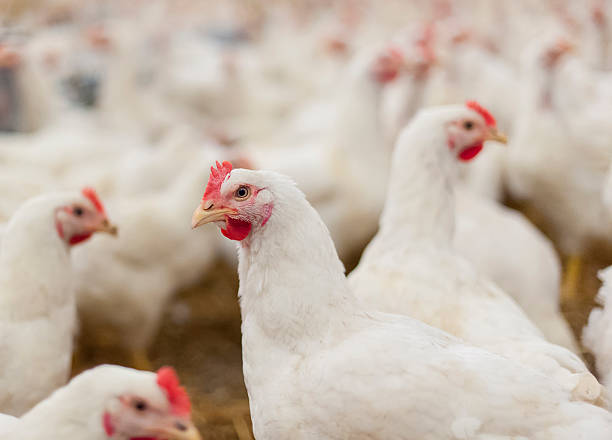
Now for the part that keeps the argument alive at 2 a.m. What if the question isn't "chicken or egg" but "chicken or chicken egg"? That first true chicken hatched from an egg laid by near-chickens. So was it a chicken egg — because a chicken came out of it — or wasn't it — because no chicken laid it? It depends on whether you define an egg by who laid it or by who hatched from it. And on that, biology shrugs. It's a question of definitions, not of facts.
Which is the nicest way out of a very old riddle. The facts were settled hundreds of millions of years ago: the egg went first. What's left for us to argue about is only how generously we want to hand it the credit.